Showing posts with label Animals. Show all posts

Friday, 11 April 2014

Frogs use their eyeballs to eat. Really!

Frogs aren't just for dissecting in science class. The many species all have unique, fun, weird, and sometimes deadly characteristics about them that would surprise the majority of animal lovers. One of the strangest has to do with simply swallowing their meal.

As soon as they grab that succulent, unsuspecting insect, they need to blink, and it's not to keep their eyeballs from flying out. The eyelids pushes their eyes down to the top of their mouth and actually helps push the food down their throat. Talk about eyes bigger than their stomach.

Most frogs actually have teeth on their upper jaw, used primarily for keeping the prey in their mouth while it awaits the eyeball assault that pushes them down to the stomach.

If you were interested in what happened after the dinner starts its journey to the stomach, look no further than the glass frog which has translucent skin. That means you can see everything on the inside, including organs, bones, and muscles. Track that fly from the mouth, all the way to the stomach where it gets digested, like a grand tour of frog body.

Friday, 28 March 2014

Humans are not superior, dolphins are smarter!

People are not the smartest creatures on Earth, scientists say, and that some species of animals, in their own way, are more intelligent - for example dolphins.

Killer whales have a complex language to communicate , and dolphins give each other the names that are based on the sound signal. This means that dolphins are finding themselves and others, say the scientists .
For thousands of years, various experts , from religious leaders to scientists , saying that people are "special and the brightest " , but science shows that some animals have the cognitive skills that more  superior human beings .
Researchers from the University of Adelaide once confirmed this thesis , a intelligence research and the evolution of primate brain supports the hypothesis that people are not the smartest creatures on Earth .
Scientists remind us that Aristotle , one of the greatest thinkers , argued that humans are superior to other animals because of their reasoning skills . But the reasoning is only one form of intelligence . The fact is that people do not understand the animals and they do not understand people , but that does not mean that their intelligence at different levels , but only that - a different kind.
People have a cumulative culture , which allows them to perform many of the actions that other animals can not do . However , this does not mean that the individuals of the human race superior to other beings.
" Monkeys are built in such a way that they do not need a house , people have evolved in an environment where you do not have to hand catch fish , but the Bears have , and they do it better than men ," the researchers said.

Wednesday, 8 May 2013

Mammoths are comming back

Japanese scientists plan to 2017. year to revive mammoths. Already geneticists all over the world working on the cloning of animals that have become extinct before the tens of thousands of years. Some experts claim that the Earth will soon look like a Hollywood movie "Jurassic Park," while others refer to reality is not confused with advertising campaigns.
The idea of ​​cloning extinct animals, but some tens of years excites minds on the margins of science and ordinary people. Today, the interrupt serious and even jokingly talks about reviving prehistoric Squamata, dinosaurs - far too long bone were in their country, so they only save the traces on the stones.
Another thing mammoths. The history of these animals began at about the same time as the history of the human race, but it was too short. Unlike the dinosaurs whose remains likely to be present in the hot rocky desert landscapes, mammoths found frozen in layers of soil (permafrost) in the arctic regions of Siberia and in North America. Over thousands of years in ice, as in the refrigerator to preserve the animal's body, preserved the soft tissue, bone, and skin often. It begins with the "miracle" of cloning a mammoth, about which scientists, despite the enormous skepticism, - for the first time seriously discussed. The only thing they need most fragments of tissues extinct, with well-preserved DNA. The realization of this project is very real, but it does not lead to anything good, is the conviction biologist Alexander Chubenko, science journalist, editor of the website "Eternal Youth".
- Not known arrangement of genes in the chromosomes, I'm not sure whether it is about the number of chromosomes as they are so frozen tissue remaining some "leftovers" and "odds and ends" of the DNA. Secondly, it is doubtful that the uterus to accept an embryo mammoth elephant, even if it is obtained. Far more interesting than these projects, cloning, and is far more promising idea Jack Horner of the University of Montana. He intends to make to the "dino-chicken" or "coco-saurus." Take chicken, activate the "sleeping" genes, which are not functioning, and the egg, perhaps in several stages, to get something like a dinosaur.
According to experts, this scientific experiment will cost about two million dollars, while the value of cloning a mammoth - billions of dollars. Considerably lower rates to "resurrect" pet owners offered a sad American businessmen. Cloning and beloved
puppy or kitten  cost of 250 thousand U.S. dollars. But one thing is - pet, and quite another - the mammoth, that simply will not survive in the present conditions is considered by many scholars, simply because the climate on Earth is quite different, but rather a 400 thousand years.
While some scientists are trying to cloning mammoth - Scientists from Australia's University of New South Wales already created genome rare frogs. This species has completely disappeared on the continent early 80s of the last century. True derived embryos did not survive, as it was with the cloning 2009th The Pyrenean mountain goat, who lived a few minutes from the moment of birth. Scientists, however, do not lose hope and the hope of a breakthrough in cloning extinct species. What can be the consequences, and if we get to the end of some monstrous creature - their thoughts on how is the doctor of biological sciences, professor, deputy director of the Institute of Molecular Genetics of the Russian Academy of Sciences, Head of viral and cellular molecular genetics IMG Sciences Vyacheslav Tarantula.
- Conduct a discussion, for example, even in the case of such a project as cloning Neanderthals. This is not a man, it is a minor species. This situation is quite controversial as human cloning, because it is not known what will be there to give birth and how to deal with this creature: as an animal or to man. In general, there are technical and moral issues, and of course economically.
Additionally Today there is another problem, which can not overlook. In Yakutia - the permafrost zone, lies a vast amount of forgotten forms of life, and began to "war" in the ruins, the remains of the missing animals. Because apart from national research teams, we are present, "the mammoth hunters" who just leads to fighting. The point is that in 1990. in world trade is prohibited elephants tusks so the tusks of a mammoth, that make up the most diverse things - from chess pieces to ornaments, to get the price. The price of one pair of tusks on the black market may be about 75 thousand euros. It is known that a necklace made from this material have even first lady Michelle Obama.
But until someone deals with the cloning of rare species of animals, and some of that money, our planet is still a far more significant problem. The biological diversity of the earth every day all the poorer. So that in the near future the world may think of cloning as yet live tigers, leopards and rhinos.

Monday, 15 April 2013

Blue Dragon Nudibranch

Blue Dragon Nudibranch. They feed on the poisonous Man of War Jellyfish, collecting the animal's toxins and storing them in little sacs on the end of their feather-like "fingers." The Blue Dragon can produce a much more powerful and deadly sting than the Man of War due to its ability to store the poison.

Saturday, 22 December 2012

Scientists find immortality gene

Tiny freshwater polyp Hydra has long caused the interest of scientists. This animal is practically immortal and shows no signs of aging.

German researchers decided to find the genetic basis of the immortality of hydra, with amazement and declared that the secret kept in FOXO gene. It is well known, since it has all the animals and man.

It turns out that this gene supports stem cells in the active force, which causes permanent tissue regeneration.

Scientists now estimate that at least will identify factors that affect the operation of FOXO genes, such as ecology, child or lifestyle.

Tuesday, 18 December 2012

What happened 65 million years ago?

For decades, scientists have argued over the cause of death of dinosaurs. A new study supports the theory that they ruled volcanoes.

The volcanic activity in the region belonging to India's killed the dinosaurs, say scientists from Princeton University. Scientists, who, for years, I can not decide whether dinosaurs killed volcanoes, meteors, asteroids, or something else entirely.

Scientists at the University of Princeton argue that the huge volcanic eruption in the region known as the "Dean of the Castle" near Mumbai caused toxic pollution of sulfur and carbon dioxide gas that killed the dinosaurs 65 million years ago.

"There's simply no evidence that the Earth was hit by a large enough meteorite or asteroid would cause mass mortality of living beings. Wholly with certainty claim to have done a volcano," said geologist Gerta Keller of Princeton.

Tuesday, 30 October 2012

The planet is rapidly deprived of flora and fauna

More animals into the category of endangered species. List of endangered plants and animals are joined by another 400 new species. The Red List now contains 20,212 species, of which a quarter of mammals, 13% birds, 41% of amphibians and 33% of coral. In the next 50 years will be gone about a third of all species of animals and plants. In an attempt to compensate for the damage caused to nature by 2020. The international community will, according to experts, to spend about 440 billion dollars.

Thursday, 18 October 2012

On the beaches of Florida found some giant eye of unknown creatures

The waves threw a huge eyeball on a beach in Florida, USA. American experts are presently unable to determine what belongs to the body being. An unexpected discovery on Wednesday morning ran into a local resident who was jogging on the beach. The eyeball was "very cold, and she was bleeding and then when I put it in a plastic bag," he said. The man is a sensational discovery kept in the refrigerator until the arrival of scientists. The eyeball was sent to the Research Institute of Fish and wild nature of Florida for further study.

Saturday, 22 September 2012

Crickin of the crickets indicates the temperature of the air

According Dolber law is necessary to count the number of votes per minute crickets, subtract that number from 40, then divide the resulting figure by seven and finally add up to the 10th And that's the current air temperature.

The old folk wisdom says that crickets advertise more as the heat increased. Or to put it another way, their activity increases with increasing air temperature.

What you probably did not know is that the American physicist and inventor in the 19th Amos Dolber Century published an article "Cricket as a thermometer," in which he presented a formula expressing the coupling crickin "enthusiasm" and temperature conditions. This however only applies to the North American crickets Oecanthus Fulton, but approximately might also affect the field crickets.

According Dolber law is necessary to count the number of votes of small bites per minute, of that number, subtract 40, then the resulting figure divided by 7, and finally add up to the 10th The formula for computing in Celsius is: T> 10 + (N - 40) / 7

This means that according to this formula cricket at a temperature of about 40 degrees Celsius supposed to sound about 250 times per minute, or about four times per second. How does that sound plausible, let readers judge for themselves.

Crickets are insects related grasshoppers, and many of them are mixed with crickets. And an article in which Dolber 1897th published his remarkable formula was originally titled "The Cricket as a Thermometer" which means "cricket as a thermometer", although it is known that the story refers to the crickets.

Friday, 14 September 2012

A Warming Earth Creates More Biodiversity, But Only In The Long Term

Global warming is a scientific reality, whether we want to ascribe it to natural processes or man-made effects. One of the questions raised by this phenomenon is how will
it affect biodiversity on the planet.

A new study by the Universities of York, Glasgow and Leeds, reveals answers that conflict with past studies. The new research involved analysis of fossil and geological records going back 540 million years and it suggests that biodiversity on Earth generally increases as the planet warms.

The catch, according to the researchers, is that this increase in biodiversity depends on the evolution of new species over millions of years. This is normally accompanied by extinctions of existing species.

The study, published in Proceedings of the National Academy of Sciences, suggests that current warming trends are unlikely to boost global biodiversity in the short term because of the long timescales necessary for new forms to evolve. The speed of current changes in temperature is actually expected to cause diversity loss, instead.

This research is a refinement of an earlier study that analyzed biodiversity over the same time interval, but with a less sophisticated data set. The earlier study concluded that a warming climate would lead to drops in overall biodiversity. Using the improved dataset, the research team re-examined patterns of marine invertebrate biodiversity over the last 540 million years.

Dr Peter Mayhew, of the Department of Biology at York, said, “The improved data give us a more secure picture of the impact of warmer temperatures on marine biodiversity and they show that, as before, there is more extinction and origination in warm geological periods. But, overall, warm climates seem to boost biodiversity in the very long run, rather than reducing it.”

Dr Alistair McGowan, of the School of Geographical and Earth Sciences at the University of Glasgow said, “The previous findings always seemed paradoxical. Ecological studies show that species richness consistently increases towards the Equator, where it is warm, yet the relationship between biodiversity and temperature through time appeared to be the opposite. Our new results reverse these conclusions and bring them into line with the ecological pattern.”

Professor Tim Benton, of the Faculty of Biological Sciences at the University of Leeds, added: “Science progresses by constantly re-examining conclusions in the light of better data. Our results seem to show that temperature improves biodiversity through time as well as across space. However, they do not suggest that current global warming is good for existing species. Increases in global diversity take millions of years, and in the meantime we expect extinctions to occur.”

Monday, 27 August 2012

7 nations face sanctions over endangered species

Seven nations may lose their ability to legally trade tens of thousands of wildlife species after U.N. conservation delegates agreed Thursday to penalize them for lacking tough regulations or failing to report on their wildlife trade.

They would prevent the countries from legally trading in any of the 35,000 species regulated by the 175-nation Convention on International Trade in Endangered Species, said Juan Carlos Vasquez, a spokesman for the U. 1. The suspensions against the seven nations — Comoros, Guinea-Bissau, Paraguay, Nepal, Rwanda, Solomon Islands and Syria — were approved by consensus among the delegates and would take effect Oct. N. Environment Program in Geneva, agreed to trade suspensions against Comoros, Guinea-Bissau, Paraguay and Rwanda based on their lack of national laws for regulating the lucrative wildlife trade office that administers the treaty. Delegations to the weeklong meeting of CITES, a treaty overseen by the U. N.

The other 3 percent are generally prohibited 1. The Geneva meeting's attendees also agreed to trade suspensions against Guinea-Bissau, Nepal, Rwanda, Solomon Islands and Syria based on their failure to adequately report what they are doing to regulate wildlife trade, as they are required to do under the CITES treaty. According to CITES, about 97 percent of the species it regulates are commercially traded for food, fuel, forest products, building materials, clothing, ornaments, health care, religious items, collections, trophy hunting and other sport. To avoid the sanctions, and the prospect of losing millions of dollars in commerce, the seven must now draw up the required legislation or submit their missing annual reports to CITES by Oct.

traded. But the multibillion-dollar illegal trade in wildlife is a growing problem, and environmentalists say a big reason is nations' failure to enact stiff penalties for traffickers or enforce wildlife laws already on the books. The delegates are expected to consider on Friday a more controversial topic: a call to resume the legal ivory trade as a way to stop the recent rise in elephant poaching in Africa 2 billion over the five years from 2006 to 2010. During that time, logging of big leaf mahogany alone accounted for $168 million in trade. CITES estimates the regulated global wildlife trade is between $350 million and $530 million a year, or almost $2. TRAFFIC, a wildlife trade monitoring network, estimates that commercial trade in wildlife has risen sharply from around $160 billion a year in the early 1990s.

That proposal, put forward in a CITES-commissioned report, would set up a centralized system to allow for the sale of ivory from elephants that either died naturally or as a result of trophy hunting, or were considered a threat or culled for ecological reasons.

It is the first time such a proposal has been made since a global ban on ivory went into effect in 1989. That ban mostly halted widespread poaching, but in the past decade the problem has worsened owing mainly to an Asian appetite for ivory chopsticks, statues and jewelry.

The rise in rhino poaching also is on the agenda.

Experts rank wildlife smuggling among the top aims of criminal networks, along with drugs and human trafficking. CITES says wildlife crime remains poorly studied, but it says international estimates of the scale of illegal wildlife trade range from between $16 billion and $27 billion a year.

Tiger parts, elephant ivory, rhino horn and exotic birds and reptiles are among the most trafficked items. To fight it, CITES has formed a consortium with Interpol, the U.N. office on drugs and crime, the World Bank and the World Customs Organization.

Saturday, 24 March 2012

Russians and Koreans clone mammoth

If scientists succeed in the enterprise, the elephant in a few years could bring the baby into the world long since extinct.

This week in Seoul signed an agreement on scientific enterprise that looks more like a science fiction movie script, but if successfully executed will again walk the earth species extinct thousands of years ago.
Northeastern University Russian Federation and South Korean Foundation for Bioengineering "Suam" hoping that in six years to make the world a living mammoth.
This type of giant elephant lived on earth millions of years. Before the eight millennium have disappeared from most of all, they survived the longest in northern Siberia, where they became extinct about 2000 years ago. Due to the cold climate there are also the best preserved specimens, so the task of Russian scientists to provide quality material from which will be preserved DNA sample extracted. They would be the end of the year should be sent to Seoul remains found in Siberian permafrost melting, the ground under the perpetual snow and ice. South Koreans believe they have the knowledge and expertise to perform the cloning procedure and will help Russian counterparts, who are reviving the mammoth number of years worked with Japanese scientists. The venture will also participate in the Beijing Institute of Genetics, told the AFP.
Seoul is the team leader of the controversial scientist Hwang Woo Suk who was ten years ago, celebrated as a national hero as the world's first cloned dog, but then embarrassed because it turned out that most research on cloning human cells falsified. Then it lost its license, but continued to conduct experiments. Last year in October announced that it had successfully cloned a coyote and announced that his next venture will be a mammoth.
The plan is to be the core of the Indian elephant cell nucleus replacement cells wollen mammoth (Mammuthus primigenius). Then the embryo is inserted into an elephant, in this case the "surrogate mother". The Korean Institute says that 22 months later, the world should have the reputation of wollen baby mammoth.
Director of the Institute Snag Hwan Hyun explains the "Wall Street Journal" that this idea popular among geneticists since the late nineties, but now have the knowledge in the field of cloning, which gives them an advantage over other international scientific centers. The biggest question is whether it can provide high-quality genetic material, because the issue remains that are thousands of years under the ice.
If the project is successful, it will be the second time that an extinct animal "resurrected". Iberian ibeks, type of wild goat, which disappeared 2000th years, was cloned three years ago from the frozen skin cells. The surrogate mother was a domestic goat, but the baby died at birth due to problems with the lungs, which had other cloned animals.


Antifreeze in the mammoth blood

Two years ago, Australian, Canadian and Danish researchers "produce" the blood of a Siberian mammoth wollen and found that it acted as a kind of antifreeze.

They used DNA from the bones of a mammoth 43 ​​000 years old and is copied to cell bacteria E. coli, which produced the authentic mammoth protein.

Research has shown that the evolution has been a mammoth-specific changes in the blood so that it can carry oxygen to all cells at very low temperatures, which is the type that comes from Africa and enable it to survive in the Arctic.
 

Saturday, 10 March 2012

How the zebra got its stripes

Rudyard Kipling may have answered how the leopard got its spots and the camel its hump, but he never explained the zebra's stripes. A new study helps fill in the void, this time with actual data.

Casting aside a long list of possible explanations, the new research proposes that a zebra's bold pattern of black and white stripes reflects light in a way that helps the animals evade disease-infested flies.

Hungry flies might not be the only force that pushed zebras to develop stripes. But the findings might offer new strategies for defending animals, and even people, against some insects.

"We have been breeding animals based on meat or milk production, and we haven't paid much attention to their coat colorations or patterns," says Susanne Åkesson, an evolutionary ecologist at Lund University in Sweden. "Maybe it's something we need to consider. Maybe there's some trick we can learn from the zebra that could help."

Scientists have been speculating about the purpose of the zebra's stripes since the 1870s, when Charles Darwin criticised Alfred Russel Wallace's theory that the stripes provided camouflage in tall grass. Zebras prefer open savannahs, Darwin argued, where the grass is too short to make stripes useful hiding tools.

Since then, theories have invoked zebra-to-zebra recognition, defense against lions who can't pick out an individual zebra from amongst a mass of stripes, and thermoregulation - as the patterns of dark and light fur might cause air turbulence, helping cool the animals off.

Åkesson and colleagues wondered if horseflies, which belong to a group called tabanids, might have something to do with the story. These flies are major pests for zebras, cows, horses and related animals. Their bites can be irritating enough to reduce grazing. And they can carry deadly diseases.
Animal attraction

In previous work, Åkesson and her team had found that horseflies are more attracted to dark animals than to white ones, likely because of the way that light reflects off of different surfaces. Direct sunlight is full of rays that shine in all directions. But when sunlight bounces off of water - or off of a dark brown horse or cow - its reflections align horizontally.

Tabanid flies are attracted to this kind of linearly polarised light: It often leads them to water, where they can lay their eggs and mate. Just as often, though, their polarised light sense leads them to large animals, which they bite and annoy to no end.

Since zebras are both dark and light, the researchers wondered if these striking animals might have an intermediate-level of attractiveness to flies. To find out, they conducted a series of experiments with oil-filled trays, odourless insect tape-covered panels and zebra-like plastic models that where black or brown, white or striped.

Every day for a few weeks during the summer on a Hungarian horse farm, flies flew to their preferred colour patterns and got trapped, allowing the researchers to collect the insects, count them and gauge their preferences.

As expected, very few flies landed on the white surfaces, the researchers report in the Journal of Experimental Biology, while hundreds went for the black objects in some cases. Surprisingly, the striped objects attracted just as few, and sometimes fewer, flies than the white surfaces did. More flies landed on black stripes than on white stripes.

When the researchers made the black stripes wider than a typical zebra's pattern, it attracted more flies. Measurements confirmed that the most polarised surfaces attracted the most insects.

Given the major advantage that zebras would get by avoiding fly bites that could kill them before they reproduced, says Åkesson, the paper offers a strong argument that stripes developed to protect the animals against insects and their diseases.
More to the story?

As solid as the new data is, though, the story is far from over, says Tim Caro, a behavioural ecologist at the University of California, Davis, who is writing a book about the evolution of the zebra's looks.

If stripes are so helpful, for example, why aren't all Eurasian horses striped? Meanwhile, studies have yet to carefully examine most of the other theories about zebra evolution. There might be many reasons why they are black and white.

Animal coloration has a long history of inspiring applications in military and other situations, Caro said, pointing to the black-and-white geometric patterns that decorated navy ships with "dazzle camouflage" during World War I.

Still, studies like this one may have their biggest impact on young minds, sparking excitement about science and the natural world.

"I think there's a real hidden and indirect conservation benefit to this kind of research," Caro says. "As we become increasingly urbanised and computer-focused rather than taking walks in the woods on Sunday afternoons, I think these handles whereby you can capture children's imaginations are going to be increasingly important."

Saturday, 10 September 2011

Animal species threatened with extinction - Dinosaurs of a new era

Biodiversity or biological diversity is the overall diversity of living organisms that inhabit our planet, as well as the diversity of their functions. For overall survival, it is extremely important to the conservation and sustainable use of biodiversity, which is seriously threatened in recent decades.

It is estimated that the Earth resides between 5 and 80 million plant and animal species, some of which are known and described only about 1.5 million. According to the UN a year disappear over 34,000 species become extinct and many even before they are classified as endangered on the list. The biggest threat to flora and fauna is a general pollution of the planet, destruction of habitat, poor access to land, the commercial exploitation: the uncontrolled picking and gathering fruits, poaching, trade in animals, the latter is a business that delivers up to eight billion dollars a year. According to some estimates, every four mammal species threatened with extinction and the extinction of plants and 50 percent. Many biologists believe that we are in the midst of the greatest extinction episode since the disappearance of dinosaurs 65 million years ago. For the last four decades of the 20th century in developing countries has been destroyed more than 40 percent of wild land, and more than 20 percent of tropical forest disappeared. At the same time has drained more than 50 percent wetlands, and sedimentation due to unsustainable use and one-third of coral reefs there is a danger to become extinct in the next 30 years.

"Globally, the best known mechanism of monitoring of individual species is the Red List of Threatened Species of the World Conservation Union (IUCN), which contains information about the status of many species on the planet, following the trends of populations, provides estimates of recording and extinct species. The data are extremely troubling, "says Dusko Dimović from the Institute for Nature Conservation and adds:" However, the protection of biodiversity in recent decades has experienced remarkable progress and is today a very dynamic area. One of the turning point was the summit in Rio de Janeiro 1992nd when for the first time defined the principles of sustainable development, the adoption of the Declaration on Environment and Development and the adoption of the Convention on Biological Diversity and Climate Change. Today is a central theme in the consideration of human dependence on biodiversity wealth of wildlife on the planet and understanding the impact that the loss of biodiversity can have on the future of the human race. "

The fundamental question is, says our interviewee, is the quality of life on the planet can sustain and develop the same speed and in an environment highly degraded natural relationships. The role of the business sector is now recognized as crucial, because the driving force of most human activities and has many implications for the environment in which we live. "The exploitation of natural resources and nature conservation and biodiversity are essentially two competing processes, but, although it may sound paradoxical, in common is just that they are both a consequence of the need for the survival of humanity," said Aleksandar Mijovic from the Agency for Environmental Protection. "The concept of sustainable development implies the rational use of components of biological diversity for further development of civilization, but in the manner and extent of biodiversity does not cause distortion, while maintaining its potential to the needs and aspirations of present and future generations, as indicated in the Convention on Biological Diversity United Nations."

It is estimated that in our country there are more than 5200 plant species, about a thousand species of vertebrates and invertebrates, tens of thousands, which is why Serbia is one of six European centers and one of 158 centers of the world's biodiversity. The special advantage of biodiversity in Serbia is the presence of numerous endemic species (those that live only in the territory, and nowhere else in the world). According to Mijovic, in our country lives over 1,600 species designated as species of international importance. "Based on the methodology of the European Agency for the Protection of the environment, our agency has established an indicator of the situation in Serbia, which shows that the biodiversity here is still quite well preserved in comparison with other European countries. The highest degree of vulnerability was reported in forest ecosystems and especially of vulnerable ecosystems such as wetlands and high mountainous habitats, saline, and šumostepe steppe ".

Tuesday, 9 August 2011

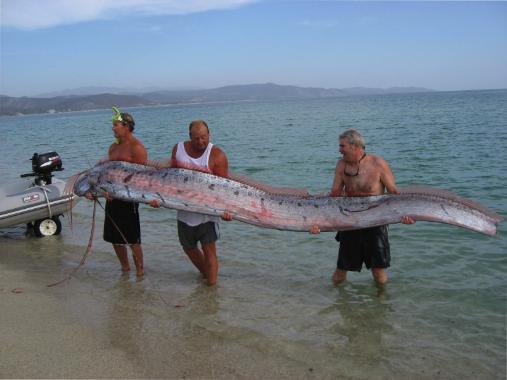
Sea monsters may still exist?

From the giant Kraken sea snakes, horrible creatures from the depths of the sea haunted the imagination of generations of seamen. Now experts say that such sea monsters might actually exist.

"Scientists are inventing new kinds of marine life, so it is impossible to find among them and such a monster," said Dr. Darren Nash of the British University of Portsmouth.

In truth, most cases of allegedly seen previously unknown sea monsters is actually false. However, at least a number of encounters with such creatures are reputable biologists reported, so their existence is not impossible, says Dr. Nash.


Thus, the 1905th Mid zoologists Edmund Waldo and Michael Nicole saw a strange "sea snake" on the coast of Brazil.

In August, the 1848th the crew of the British Royal Navy in the South Atlantic noticed a creature 18 feet long. At that time, biologists thought that London was probably an elephant or even a sea canoe wrong.

Since the last few years large numbers of new species of whales and sharks, it is not impossible that some great sea creature waiting for its moment.

Some experts have suggested that today's monsters can be plesiosaurusi, long-necked marine reptiles that lived during the dinosaur.


This theory is refuted Dr. Charles Pakston.

"If prehistoric animals living today, it means that we have misinterpreted all the fossils discovered so far," he said, adding that this does not mean that all the great sea creatures discovered.

Eight large marine species discovered in the last 20 years.

However, the search for creatures whose existence is not proven and still not subsided.

Wednesday, 13 July 2011

Purple frog!

Nature is full of amazing creatures, some are even stranger than the strangest dream.

Purple frogs can be found in the Western Ghat, India. Common name for this animal is a frog or purple frog with a pig nose. Found in October 2003. year, and found that is unique to the region. Her croaking resembles chicken cluck.

Purple frog spends most of the year in the ground and the air comes out only two weeks during the monsoon season or to be mated.

Hmm, probably in the region occurred INDUSTRIAL some disasters, the occurrence of these animals conceal the discovery of new species. :)

Sunday, 10 July 2011

New type of mouse discovered in Brazil

A new type of mouse discovered in Brazil, announced today the Institute for Biodiversity Conservation "Siko Mendes" in Brazil.

Ceradomis goitaka or Gojtaka mouse is located in a national park of Rio de Janeiro, said the institute.

The statement adds that the name of the selected scientists at the National University of Rio de Janeiro, reports AFP.

The name of this rodent comes from the local domestic population - Gojtakazes.

Saturday, 4 June 2011

Discovered new animals

International institute for research types, each year publishes a list of new unusual species on the list this year found the spider "Darwin", which represents the network two times stronger than that of ordinary spin spider.

He can also spin more than 25 meters networks to cross the river Madagascar, where it was discovered.

The bacteria that eats the rust on the ship "Titanic" is still one of the great discoveries and believes that it could be useful for cleaning oil platforms on the ocean floor.

Another interesting newcomer is the snail, "Tyrannosaurus", which proved that small animals can eat big, and was discovered when he attacked the nose of a girl in Peru.

This is the only type of snail that has teeth and jaws.

Friday, 3 June 2011

Nanotechnology helped a wounded seal cub

In Kaliningrad used to treat animals with special bandages coated silver. Metal helps in the treatment of extremely severe wounds without antibiotics. Nano-bandages the invention of the Baltic Federal University students. With these bandages wound heals three times faster. The first patient on whom they tested were abandoned baby seals when they ate dogs. Young scientists are planning to patent his invention. Nano-bandages not cost much so there is a possibility of mass production.

Saturday, 21 May 2011

Monkeys are racist to

Racial, ethnic and religious prejudices have their roots in the distant past, according to a survey of scientists who have studied the apes.

Several experiments showed that the animals are much more cautious when it comes to intruders, and to have a bad prejudices about them. The survey was conducted on the uninhabited island of Cayo Santiago Puerto Rican in which live many different kinds of monkeys.

Neha Mahajan, a student at Yale University, led a team of psychologists who have studied the behavior of monkeys because these animals are very similar people, live in groups and build strong social ties.

Psychologists has long been known that the bias point of automatism, and that they are not even aware. Tests on monkeys have shown that biases such as "we " and "they" have their roots from ancient times.
 
Researchers followed a time in which the monkeys looked at the photos by their group and the monkeys that did not belong to that group. After several experiments, we found that the monkeys looked more photos of unknown but familiar faces.

To ensure that monkeys are not only curious, the researchers combined the photographs of monkeys who have recently left the group and those who have joined her.

During this experiment, the monkeys again looked more photos intruders, ie. those monkeys who left the group, although they were more familiar with the newcomers.
 
Monkeys are obvious differences made on the basis of whether the monkeys in the photos of their group members or not. Mahayana and her colleagues devised an experiment to discover whether animals have a negative attitude toward the intruders, and the newcomers. Then the group members with photos and intruders combine photos of attractive items such as fruit, and unattractive, such as spiders, writes Daily Mail.
 
When the photo of the group members combined with a photograph of fruit, or intruders with a photograph photographs spider monkeys are quickly lost interest. But when a photograph of members of the group paired with spider monkeys have long observed.

The researchers assume that the monkeys confused combination of right and wrong. This showed that the monkeys do not make a difference between group members and intruders, but also to link the members of your group with good things, and intruders with bad.
 
The magazine "Scientific American" (Scientific American) writes that the results of this study demonstrate the evolutionary basis of prejudice.